Samsung's Galaxy S26 lineup is now official, bringing three flagship phones to market: the Galaxy S26, Galaxy S26+, and Galaxy S26 Ultra. Across the family, Samsung is standardizing on 12GB of RAM, Android 16 with up to seven major upgrades, brighter LTPO AMOLED displays, Wi-Fi 7, and stronger long-term value through extended software support. The lineup also sharpens the separation between the compact base model, the bigger and sharper S26+, and the camera-first S26 Ultra.
In this guide, we'll walk through the key specs, prices, and review placeholders for all three phones. You'll find a quick comparison box for each model, followed by a deeper look at the chipset, camera system, memory and storage, display, and battery life so you can quickly decide which Galaxy S26 model makes the most sense for your budget and usage.
If you are still deciding whether the newest Galaxy is worth it, compare this page with the Galaxy S25 lineup, the best camera phones guide, and the Xiaomi 17 lineup.
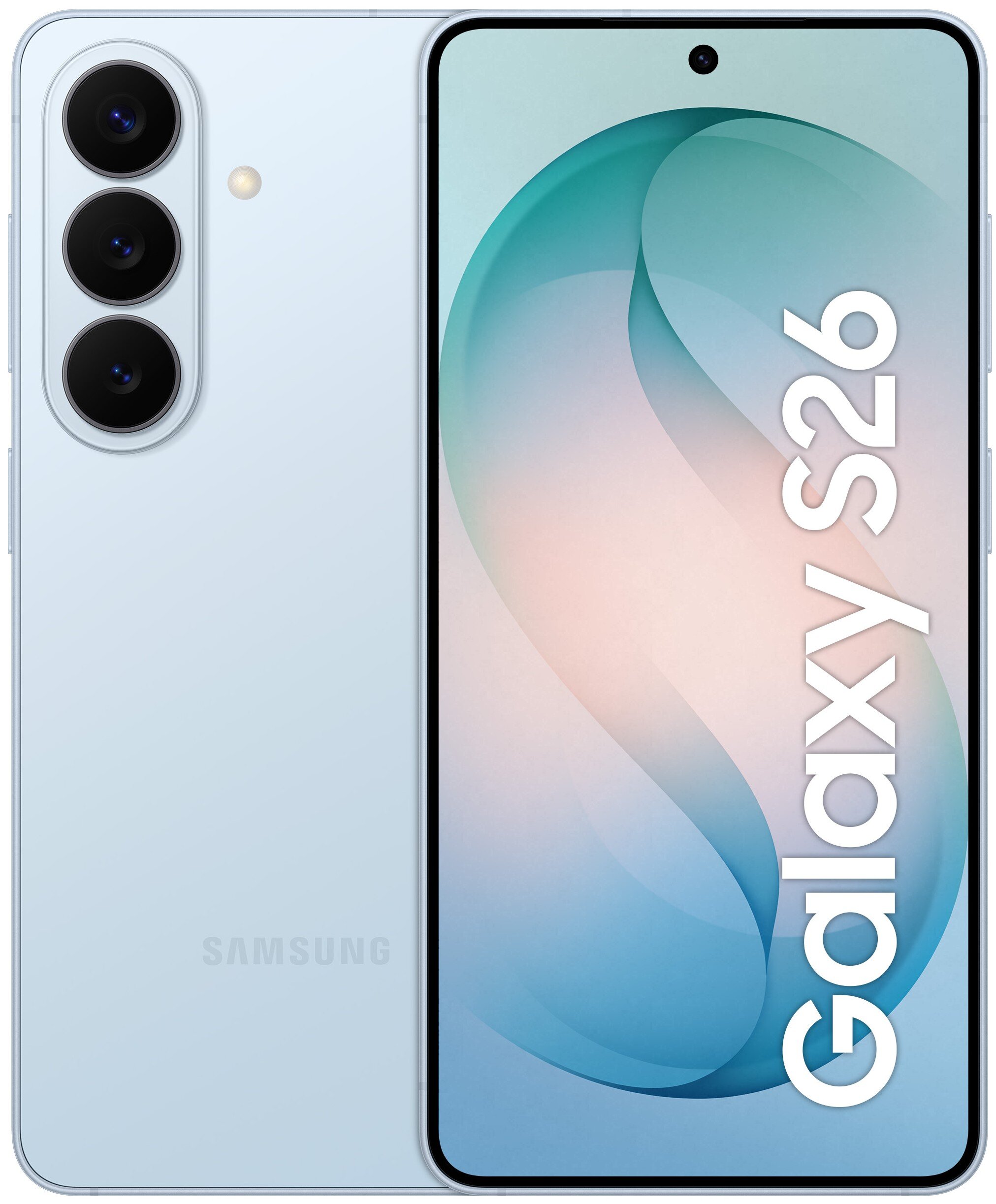
Samsung S26
Platform
Memory
Size
Battery
Main camera
Video modes
Selfie camera
Selfie video
CPU
The Galaxy S26 moves the base model forward with Android 16, Samsung's One UI 8.5, and a split flagship platform strategy: Snapdragon 8 Elite Gen 5 in the US and China, and Exynos 2600 in the rest of the world. Either way, the phone stays in compact-flagship territory while upgrading to 12GB of RAM across all storage tiers, which gives the smallest S26 much better multitasking headroom than older base Galaxy models.
Compared with the Galaxy S25, Samsung is pushing the S26 into a more premium slot with a larger 6.3-inch panel, a slightly bigger battery, and up to seven major Android upgrades. The Enterprise Edition also keeps a 128GB/12GB option for business deployments, which makes this model easier to standardize for corporate fleets without giving up long-term software support.
Camera
Samsung keeps the proven triple-camera layout here: a 50 MP main camera, a 10 MP 3x telephoto, and a 12 MP ultrawide lens. The hardware is tuned for people who want dependable flagship photography without stepping up to the Ultra, while features like Best Face, Horizon Lock, Super Steady video, and HDR10+ recording keep the experience competitive for both casual creators and travelers.
Video capture remains one of the strongest reasons to buy the S26. It records up to 8K at 30 fps, offers 4K at up to 60 fps, and keeps high-frame-rate 1080p modes for slow motion. That makes it a better fit for balanced photo-video use than many compact rivals that sacrifice the telephoto lens or limit advanced recording modes.
Memory & Storage
Storage starts at 128GB and goes up to 512GB, with every version paired to 12GB of RAM and UFS 4.X storage. That is a clean, high-end memory stack for a non-Ultra flagship and gives the S26 enough bandwidth for fast app launches, local editing, and large 4K or 8K media files.
The lack of a microSD slot is expected at this tier, so the main buying decision is simply how much local storage you want from day one. For buyers planning to keep the phone for several years, the 256GB trim looks like the safest middle ground between price and headroom.
Display
The S26 uses a 6.3-inch Dynamic LTPO AMOLED 2X panel with a 120Hz refresh rate, HDR10+, and up to 2600 nits peak brightness. The 1080 x 2340 resolution keeps power draw in check while still landing at around 411 ppi, which is more than sharp enough for streaming, gaming, and day-to-day reading.
Corning Gorilla Glass Victus 2 protection, IP68 sealing, and Samsung's Armor Aluminum 2 frame give the smallest S26 a solid flagship shell. It is still the easiest phone in the lineup to handle one-handed, which will matter more to some buyers than the QHD panel available higher up the range.
Battery
Battery capacity rises to 4300 mAh, and Samsung pairs it with 25W wired charging, 15W wireless charging, and reverse wireless charging. On paper that is not the fastest setup in 2026, but the combination of a compact body, efficient OLED panel, and modern 3 nm silicon should keep endurance comfortably in all-day territory for most users.
Samsung also keeps practical flagship extras such as USB-C 3.2, DisplayPort output, DeX, and Wi-Fi 7 support. That makes the S26 more versatile than its size suggests, especially for buyers who want a smaller phone that can still double as a productivity device when docked.
YouTube reviews
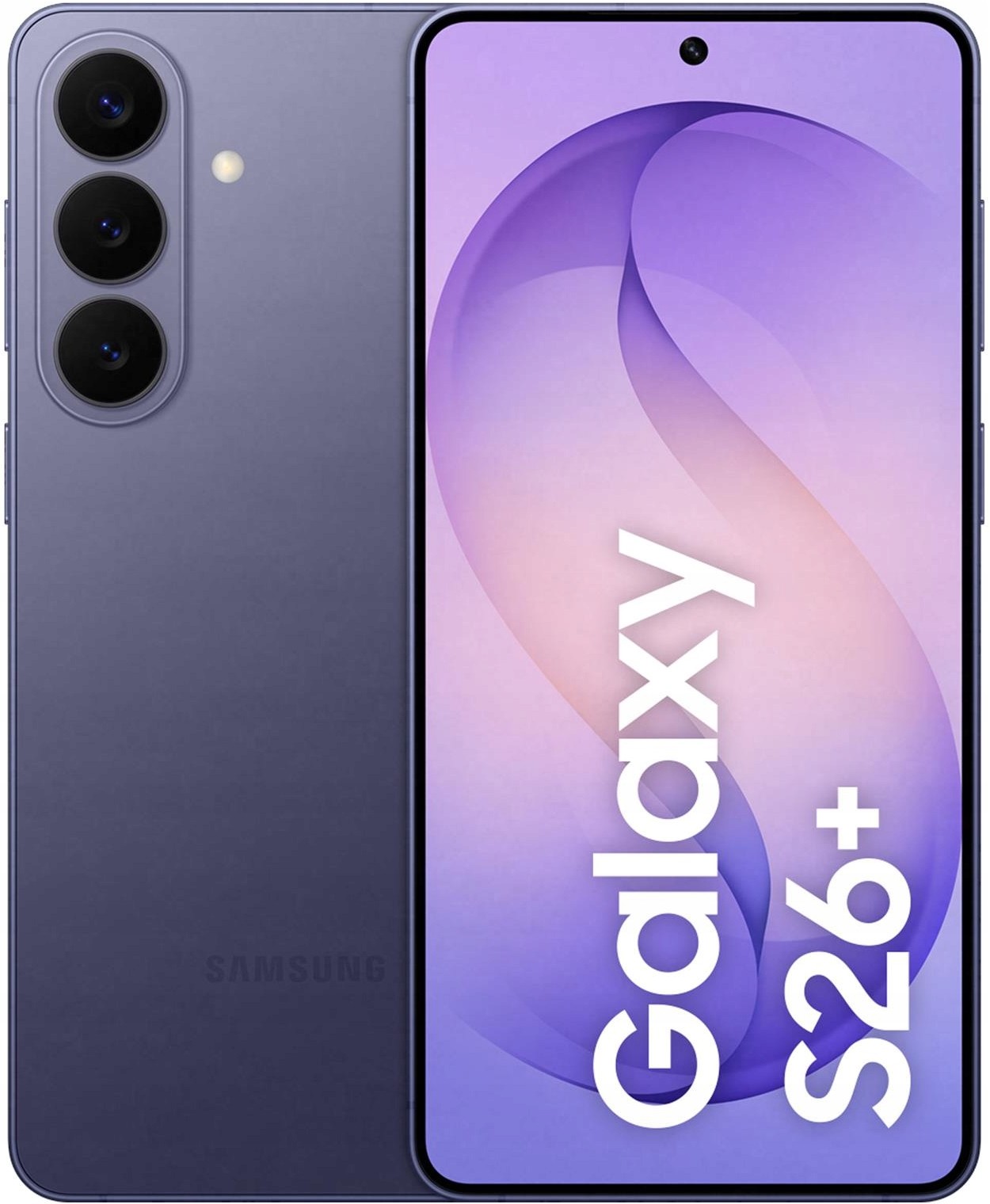
Samsung S26+
Platform
Memory
Size
Battery
Main camera
Video modes
Selfie camera
Selfie video
CPU
The Galaxy S26+ keeps the same chipset strategy as the base model, but wraps it in a bigger QHD-class handset that is better suited to gaming, streaming, and productivity. It offers either Snapdragon 8 Elite Gen 5 or Exynos 2600 depending on region, alongside 12GB of RAM and Samsung's full seven-year software commitment, which keeps the Plus model relevant as a long-term premium Android buy.
Compared with the regular S26, the S26+ is the lineup's middle ground: larger screen, faster charging, Ultra Wideband support, and more aggressive wireless charging, without the weight and price jump of the Ultra. That makes it the most balanced option for buyers who want a large-screen Galaxy without paying flagship-ultra money for the stylus and extreme camera hardware.
Camera
Samsung reuses the same reliable triple-camera hardware from the S26, which is a sensible decision in this tier because image quality is already strong across the focal lengths most people use every day. The 50 MP main camera handles general photography, the 10 MP telephoto gives true 3x optical reach, and the 12 MP ultrawide covers landscapes, travel, and group shots.
The advantage of the S26+ is not a different sensor mix but the overall package around it: a larger display for framing and reviewing footage, a bigger battery for longer shooting sessions, and the same 8K and 4K recording capabilities as the rest of the non-Ultra line. For buyers who shoot lots of video but do not need the Ultra's 200 MP main sensor, this is likely the lineup sweet spot.
Memory & Storage
Unlike the base model, the S26+ starts at 256GB, which makes it easier to recommend to people capturing lots of photos, offline media, and 4K video. Both storage tiers are backed by 12GB of RAM and UFS 4.X storage, so day-to-day responsiveness and file transfer performance should stay close to true flagship level.
That 256GB minimum also simplifies the buying decision. If you know you tend to keep a large local library or work with heavier video files, the 512GB version is the one to target, but even the entry trim is roomy enough that most buyers should not feel storage pressure early in the phone's life.
Display
The S26+ steps up to a 6.7-inch Dynamic LTPO AMOLED 2X panel with a sharper 1440 x 3120 resolution, 120Hz refresh rate, HDR10+, and the same 2600-nit peak brightness target as the rest of the family. At roughly 516 ppi, it is the sharpest display in the lineup, which makes it especially appealing for reading, editing photos, and watching high-resolution content.
Samsung also keeps the slim body under control at just 7.3 mm, while maintaining IP68 protection and Armor Aluminum 2 framing. It is still a big phone, but it avoids feeling bulky, and that thinner build helps it stand out against many large Android competitors that have become heavier and thicker in pursuit of even bigger batteries.
Battery
A 4900 mAh battery and 45W wired charging give the S26+ a clearer endurance and convenience edge over the base model. Wireless charging also improves to 20W with Qi2.2, and the phone retains reverse wireless charging for accessories, so the Plus feels meaningfully more complete as an everyday flagship for heavier users.
Combined with Bluetooth 6.0, Wi-Fi 7, DeX, UWB, and USB-C 3.2 with DisplayPort, the S26+ covers nearly every premium-feature checkbox. It is the model in the lineup that most directly balances price, screen quality, endurance, and practical features without leaning too hard into either compact-phone minimalism or Ultra-level excess.
YouTube reviews
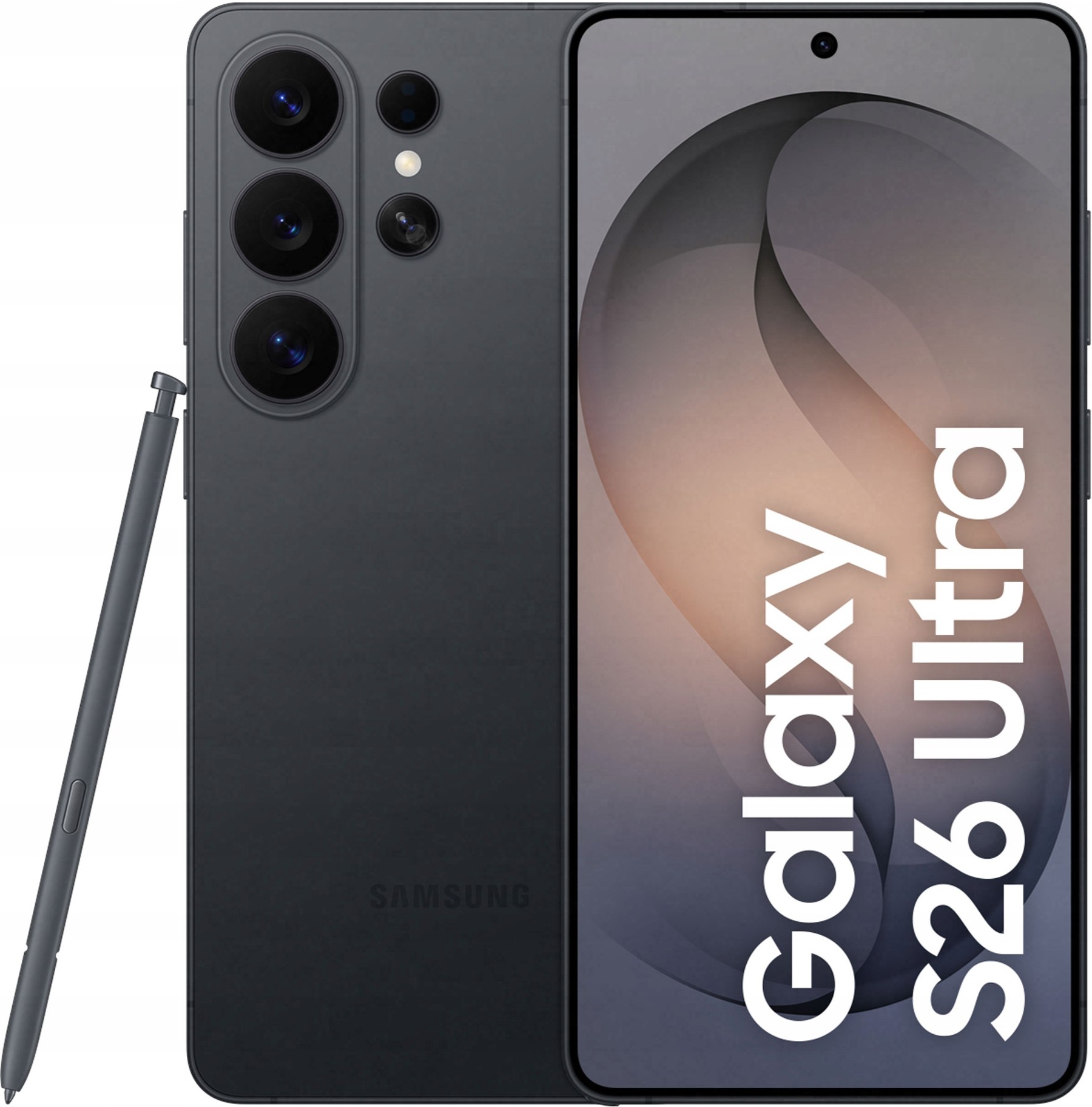
Samsung S26 Ultra
Platform
Memory
Size
Battery
Main camera
Video modes
Selfie camera
Selfie video
CPU
At the top of the lineup, the Galaxy S26 Ultra goes all-in on Qualcomm with the Snapdragon 8 Elite Gen 5 worldwide. Samsung pairs it with 12GB RAM on the 256GB and 512GB trims, plus a 16GB option on the 1TB model, which makes the Ultra the clear productivity and power-user flagship in the family.
This is also the model most people will look at if they want every Samsung extra in one phone: S Pen support, Samsung DeX, UWB, Wi-Fi 7, DisplayPort output, and the longest software runway Samsung offers. The result is a device built not just as a camera phone, but as Samsung's most complete mobile workstation for 2026.
Camera
The S26 Ultra is the only phone in the lineup that materially changes the camera equation. A 200 MP main sensor with an f/1.4 aperture, a 50 MP 5x periscope camera, a 10 MP 3x telephoto, and a 50 MP ultrawide make this Samsung's most flexible imaging stack. The wider main aperture and upgraded ultrawide/periscope pairing should help the Ultra stay strong in low light, zoom, and high-detail capture alike.
For video, Samsung keeps 8K recording, adds 4K at up to 120 fps, and backs it up with gyro-EIS, HDR10+, laser autofocus, and Super Steady support. That gives the Ultra a clear lead over the S26 and S26+ for buyers who care about professional-looking mobile video or want a single phone that can cover wide, standard, portrait, and long-zoom shooting without obvious compromises.
Memory & Storage
The Ultra starts at 256GB and scales to 1TB, which is where the 16GB RAM option appears. With UFS 4.X storage across the board, that setup is designed for heavy photo libraries, larger apps, and more serious local editing than the other two models are likely to see.
Samsung still does not offer microSD expansion, so the 1TB version is the natural fit for buyers who plan to record lots of 4K and 8K footage or want a long-lived device with plenty of offline storage. The lower tiers remain more affordable, but the Ultra is clearly optimized for people who already know they are power users.
Display
A 6.9-inch Dynamic LTPO AMOLED 2X panel, 1440 x 3120 resolution, 120Hz refresh rate, HDR10+, and 2600 nits peak brightness give the S26 Ultra a flagship-grade canvas for both creation and consumption. Samsung also layers on Gorilla Armor 2, an anti-reflective coating, and a built-in Privacy Display feature that makes the panel more useful in bright outdoor scenes and crowded work settings.
Compared with the S26+, the Ultra trades a touch of pixel density for a larger canvas and more premium panel treatment. It is also slimmer and lighter than many battery-heavy ultra-flagships, which matters because this is the model most likely to be used for note taking, long editing sessions, and extended video shooting.
Battery
Samsung keeps the battery at 5000 mAh, but the charging system takes a real step forward: 60W wired, 25W wireless on Qi2.2, and reverse wireless charging. That closes part of the charging gap to Chinese flagships while preserving the accessories ecosystem and long-term reliability buyers typically expect from Samsung's Ultra line.
The official endurance figures also look strong, with a 55-hour rating and Class A energy labeling. For many buyers, that means the S26 Ultra's biggest practical improvement is not just the camera or the chipset, but the fact that the full premium package now feels more complete day to day, especially if the S25 Ultra's slower charging was one of the last remaining pain points.
YouTube reviews
The Samsung Galaxy S26 family is more polished than revolutionary, but that is not a criticism. The S26 sharpens the compact flagship formula, the S26+ looks like the safest all-around recommendation for big-screen buyers, and the S26 Ultra combines Samsung's strongest camera stack with faster charging and the usual Ultra extras.
If you are choosing across the lineup, the real split is simple: S26 for size, S26+ for balance, and S26 Ultra for maximum camera and productivity hardware. All three get long software support, modern connectivity, and pricing that makes Samsung's 2026 flagship strategy feel coherent from top to bottom.