10 best foldable camera phones to buy in 2026
In 2026, foldable phones finally stopped compromising on the camera. The newest generation packs larger main sensors, real periscope telephoto lenses, variable apertures and cover screens that double as viewfinders, while folding into bodies thinner than last year's slab flagships.
In this guide, we break the best foldable camera phones into 3 subsections. The first compares the Apple iPhone Duo, Google Pixel 11 Pro Fold and Samsung Galaxy Z Fold8 Ultra, the second covers the Xiaomi 18 Fold, vivo X Fold6, Honor Magic V6 and OPPO Find N6, and the third pairs the Samsung Galaxy Z Flip8 clamshell with the Huawei Mate X7 and the Motorola Razr Fold.
Each phone entry starts with the model's own core specs and then compares it directly with the other phones in its subsection, covering chipset performance, camera hardware, memory and storage, display quality, battery life, and the creator-focused strengths that matter most in daily use.
Now, let`s take a look at the foldable camera phones we can buy this year:
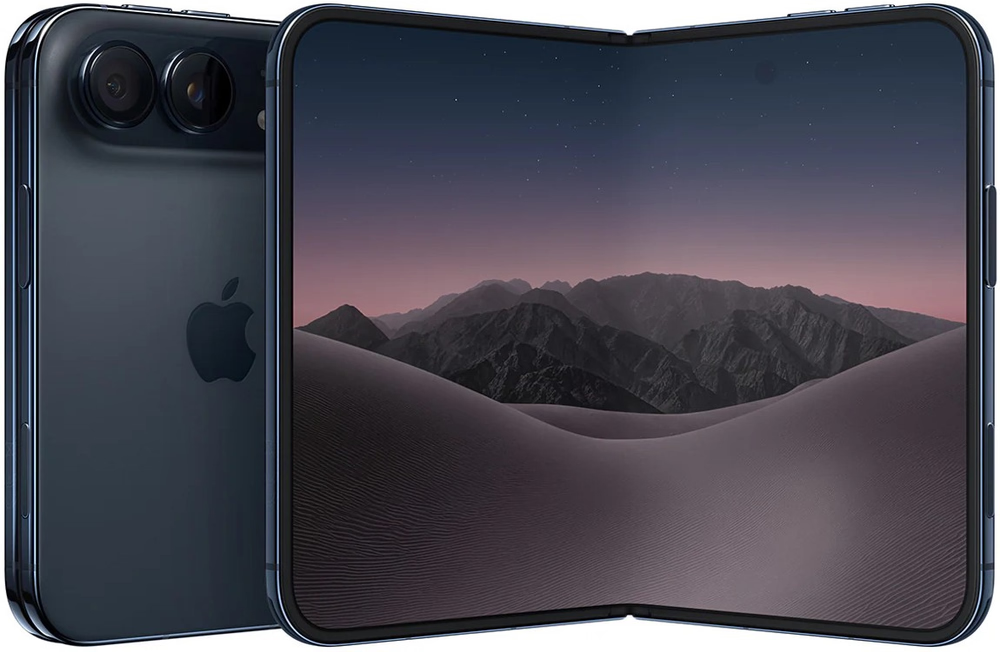
Apple iPhone Duo
Platform
OS: iOS 27CPU: Apple A20 Pro (2 nm)
Memory
12/256, 12/512, 12/1024, 12/2048Size
7.6" inner (4:3), 5.4" coverBattery
Dual-cell, up to 31 h video playback (inner display)Buy now on Apple
Main camera
48 MP, f/1.6, 24mm (Fusion Main), sensor-shift OIS, 2x optical-quality crop48 MP, f/2.2, 13mm, 120° (Fusion Ultra Wide), macro
Video modes
4K@24/25/30/60/120fps (Dolby Vision)1080p@25/30/60/120/240fps
Selfie camera
12 MP Center Stage (cover)Under-display camera (inner)
Video modes
4K@24/25/30/60fps1080p@25/30/60fps
🤖 CPU
Apple's first foldable runs the A20 Pro, the same 2 nm silicon found in the iPhone 18 Pro Max, and launches with iOS 27. The pitch is not benchmark dominance but sustained consistency: ProRes capture, on-device AI, and heavy multitasking split across two displays are exactly where Apple's efficiency and thermal design tend to shine.
Next to the Snapdragon 8 Elite Gen 5 for Galaxy in the Z Fold8 Ultra, Apple still has the edge in single-core responsiveness and app-level polish, while Samsung pulls ahead in sustained multi-threaded work and 8K encoding. Google's Tensor G6 in the Pixel 11 Pro Fold is the most AI-specialised of the three but the least impressive in raw throughput. For video-first creators already inside the Apple ecosystem, the Duo is the most predictable performer here.
📸 Camera
The Duo takes a deliberately different approach: two 48 MP Fusion cameras, a main and an ultrawide, with no dedicated telephoto lens. Zoom comes from a cropped 2x "optical-quality" mode and digital zoom beyond that, which is the most conspicuous compromise on a phone that starts at $1,999. What Apple does offer is its most consistent colour pipeline, macro capability on the ultrawide, and 4K120 Dolby Vision recording on the main camera.
That puts it behind both rivals on versatility: the Fold8 Ultra gives you a genuine 3x telephoto and the highest-resolution sensor in the group, while the Pixel 11 Pro Fold reaches 5x optically with Google's computational processing doing the heavy lifting. Where the Duo answers is video and workflow — Dolby Vision, Cinematic mode, strong stabilisation and hands-free capture modes that use the folding hinge as a stand. If your output is video, it is the best of the three; if it is stills at any focal length, it is the most limited.
💿 Memory & Storage
Apple keeps a single 12 GB memory tier and stretches storage from 256 GB all the way to 2 TB, the highest ceiling in this lineup. For a device aimed at people who record in ProRes and Dolby Vision, that 2 TB option is arguably the most important specification in this entire section.
Samsung offers a more granular ladder with 16 GB at the top and Google matches that 16 GB ceiling but stops at 1 TB. Apple's approach means you cannot buy more RAM, only more room to store what two cameras plus a foldable workflow produce. In practice that is a fair trade for its target audience, but power users who keep dozens of apps alive on the inner display have less headroom than on the Android side.
📱 Display
The headline engineering achievement is the 7.6-inch inner display, a 4:3 panel with a resolution of 2670 x 1878 and a 120 Hz refresh rate, alongside a compact 5.4-inch cover screen. Reviewers who handled the Duo consistently describe the crease as barely noticeable, and Apple also offers a nano-texture glass option that makes the big screen far easier to use outdoors.
Samsung still leads on outright panel size and brightness consistency, and the Pixel 11 Pro Fold offers a very bright 8-inch Super Actua Flex screen with a more visible crease. Apple's advantage is calibration and glare control rather than headline brightness, and for photographers who care about judging colour on the device itself, that is a meaningful difference.
🔋 Battery
Apple used a dual-cell design to power two displays, and the result is a battery that comfortably outlasts the rest of this group on paper, with up to 31 hours of video playback on the inner screen and considerably more when you stay on the cover display. That is the single biggest practical improvement over previous iPhone designs.
Samsung and Google both land around 5,000 mAh, and the Pixel 11 Pro Fold is now the slowest to charge of the three, while the Fold8 Ultra supports 45 W wired. Apple's wired speeds remain conservative, but strong efficiency and MagSafe charging keep it competitive in everyday use rather than on paper. For long days away from a charger, the Duo is the safest bet of this subsection.
🎞️ YouTube reviews
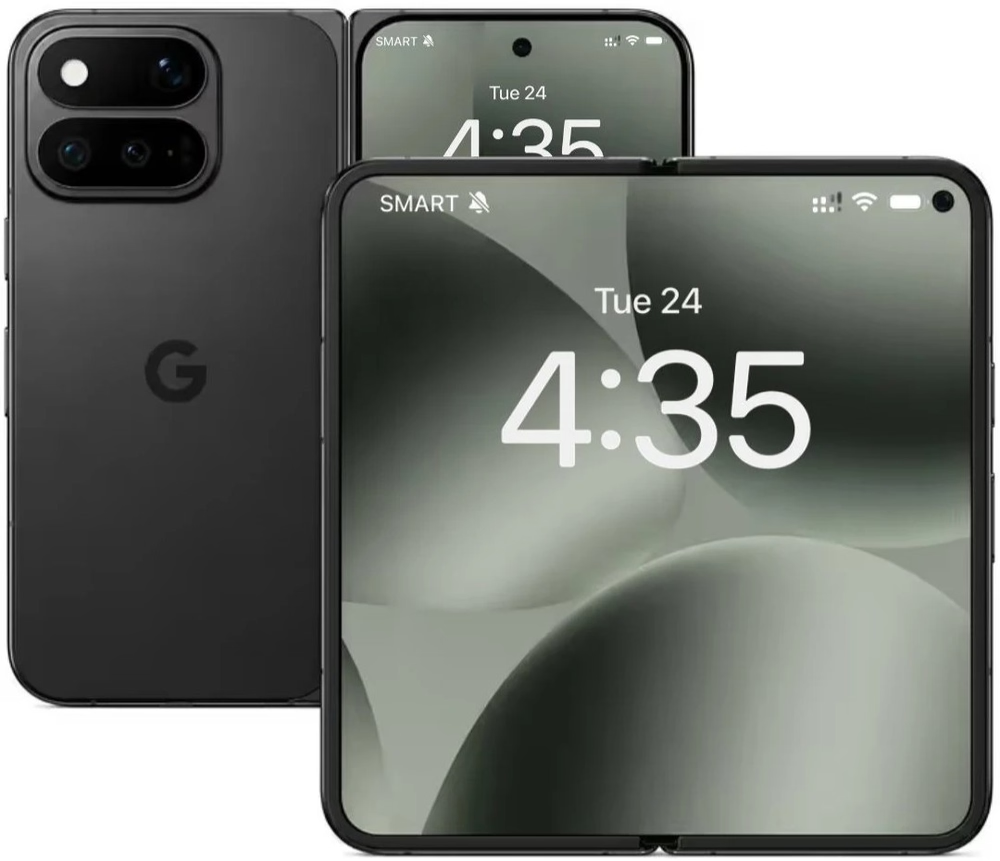
Google Pixel 11 Pro Fold
Platform
OS: Android 17CPU: Google Tensor G6
Memory
12/256, 16/512, 16/1024Size
8.0" Super Actua Flex inner, 6.5" coverBattery
4985 mAh, 30W wired, Qi2 wirelessBuy now on Amazon
Main camera
48 MP, f/1.7, 25mm (wide), 1/1.3", OIS10.8 MP, f/3.1, 106mm (periscope telephoto), 5x optical zoom
10.5 MP, f/2.2, 127° (ultrawide), macro focus
Video modes
4K@24/30/60fps1080p@24/30/60/120/240fps
Selfie camera
10 MP (cover), 10 MP (inner)Video modes
4K@30/60fps1080p@30/60fps
🤖 CPU
Tensor G6 is not built to win benchmark charts, and Google has never pretended otherwise. What it does deliver is the tightest integration between camera hardware and machine learning on Android, which is why features such as Super Res Zoom, Best Take and Magic Editor feel native here rather than bolted on.
Against the Snapdragon 8 Elite Gen 5 for Galaxy in the Z Fold8 Ultra and the A20 Pro in the iPhone Duo, Tensor G6 trails on raw throughput but keeps pace in everyday use, and it handles sustained on-device AI better than its benchmark scores suggest. If you shoot and edit mostly through Google's own apps, the gap in raw performance rarely shows up in practice; if you play demanding games or export long 8K clips, Samsung's chip is simply faster.
📸 Camera
Hardware takes a step forward this generation: a 48 MP main sensor, a 10.8 MP 5x periscope telephoto and a 10.5 MP ultrawide with macro focus. That 5x periscope gives the Pixel the longest optical reach of the three Western flagships here, and Google's processing keeps colour, exposure and skin tones unusually natural straight out of camera.
The trade-off is sensor size. Samsung's 200 MP main captures more raw detail and the iPhone Duo delivers more predictable video, but neither reaches 5x optically, and the Pixel's 30x Super Zoom remains the easiest way to frame distant subjects without a tripod. Add foldable-specific tools such as Dual Screen Preview and Tabletop Mode and it becomes the most practical all-rounder of this subsection, even if it is the least impressive on a spec sheet.
💿 Memory & Storage
Google offers up to 16 GB of RAM with storage configurations up to 1 TB, which matches Samsung's top tier and is genuinely useful here because so much of the Pixel experience runs on-device rather than in the cloud.
The iPhone Duo tops out at 12 GB and the Z Fold8 Ultra offers 16 GB only in its highest configuration, so if you routinely work on large files while multitasking, the Pixel's combination of generous RAM and aggressive memory management is a real advantage. Storage is the one place it falls behind: Apple's 2 TB option remains unmatched for on-device video workflows.
📱 Display
The 8-inch Super Actua Flex inner panel is bright, sharp and rated for a much longer folding life than the previous generation, with Google claiming three times the durability. The 6.5-inch cover screen has the most conventional aspect ratio of the three, which makes it the easiest of this group to use closed.
Samsung still holds the edge on crease visibility and the iPhone Duo counters with its nano-texture option and tighter colour calibration, but the Pixel's screen is the one most people will find comfortable to live with because the cover display feels like a normal phone rather than a narrow strip. For editing on the big panel, all three are genuinely usable, which was not true two generations ago.
🔋 Battery
The Pixel 11 Pro Fold carries a battery of roughly 4,985 mAh with 30 W wired charging and Qi2 magnetic wireless charging, which is a genuine convenience if you already own MagSafe-style accessories. Google now claims better power efficiency from Tensor G6 and the new display stack, and in practice it comfortably lasts a full day of mixed shooting and browsing.
It is, however, the slowest of this trio to charge, and Apple's dual-cell Duo outlasts it on quoted video playback while Samsung's Fold8 Ultra refills faster at 45 W. None of the three will strand you, but if you shoot all day and recharge in short windows, the Pixel is the one that asks for the most patience.
🎞️ YouTube reviews
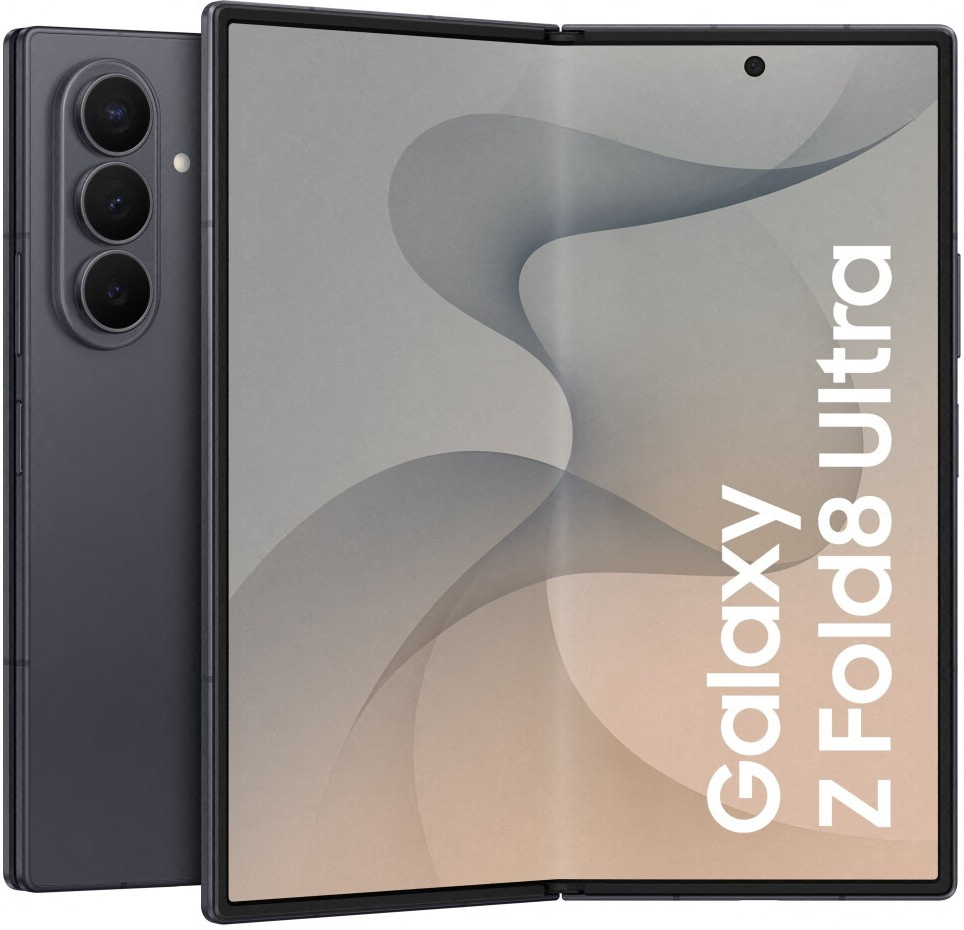
Samsung Galaxy Z Fold8 Ultra
Platform
OS: Android 17 (One UI 9)CPU: Snapdragon 8 Elite Gen 5 for Galaxy (3 nm)
Memory
12/256, 12/512, 16/1024Size
8.0" inner, 6.5" cover215 g (7.58 oz)
Battery
5000 mAh, 45W wired, 20W wirelessBuy now on Amazon
Main camera
200 MP, f/1.7, 24mm (wide), 1/1.3", OIS50 MP, f/1.9 (ultrawide)
10 MP, f/2.4, 67mm (telephoto), 3x optical zoom, OIS
Video modes
8K@30fps4K@30/60/120fps
1080p@30/60/240fps
Selfie camera
10 MP (cover), 10 MP (inner)Video modes
4K@30/60fps1080p@30/60fps
🤖 CPU
The Galaxy Z Fold8 Ultra runs on the Snapdragon 8 Elite Gen 5 for Galaxy, Samsung's region-tuned version of Qualcomm's flagship silicon. That chip is what makes 200 MP burst shooting, 8K capture and desktop-style multitasking on the 8-inch canvas feel effortless, and it keeps thermals in check during long recording sessions.
Against Apple's A20 Pro in the iPhone Duo and Google's Tensor G6 in the Pixel 11 Pro Fold, Samsung's platform is the strongest sustained multi-core performer of the three. Apple still wins short single-core bursts and stays closer to its peak performance for longer, while Google trades raw speed for on-device AI features such as Camera Coach and Magic Editor. For heavy editing and 8K encoding, the Fold8 Ultra is the one that feels least constrained.
📸 Camera
Samsung finally stopped treating the Fold as a second-class citizen. The Z Fold8 Ultra inherits the 200 MP main sensor from the S26 Ultra and pairs it with a much-improved 50 MP ultrawide (now capable of 8K video) and a 10 MP 3x telephoto. In good light the main camera resolves excellent detail, and the 50 MP ultrawide upgrade closes a gap that Samsung folds lived with for years.
The catch is zoom. Where the S26 Ultra gives you both 3x and 5x telephoto cameras, the Fold8 Ultra stops at a single 3x module, so the iPhone Duo's cropped 2x "optical-quality" mode and the Pixel 11 Pro Fold's 5x periscope tell different stories: Apple leans on software and video, Google reaches further optically, and Samsung sits in the middle with the highest-resolution sensor of the trio. If you mainly shoot 1x and ultrawide, the Fold8 Ultra is the strongest pick here; if you live at 5x and beyond, the Pixel is easier to recommend.
💿 Memory & Storage
Memory options start at 12/256 and run up to 16/1024, which is the same top tier as last year but now paired with UFS 4.x storage and a much more efficient chip. That combination matters more on a foldable than on a slab phone, because running two apps side by side while a photo export churns in the background is exactly the kind of workload this device invites.
Compared with the iPhone Duo, which pairs 12 GB of RAM with up to 2 TB of storage, Samsung still offers the more flexible memory ladder rather than a single large-capacity tier. Google matches the 16 GB ceiling on the Pixel 11 Pro Fold but caps storage at 1 TB. For anyone who keeps large RAW libraries or 8K clips on device, Apple's 2 TB tier remains unmatched, while Samsung gives the better multitasking headroom.
📱 Display
The 8.0-inch inner panel is a Dynamic AMOLED 2X LTPO screen with a 120 Hz refresh rate and a crease that has become genuinely hard to find in normal use, while the 6.5-inch cover display is wide enough to use one-handed without awkward hand shuffling. Peak brightness is high enough for comfortable outdoor framing, and the new hinge makes the whole device feel noticeably more rigid than the Fold 7.
The iPhone Duo counters with a 7.6-inch 4:3 inner panel and a nano-texture option that cuts glare, and the Pixel 11 Pro Fold uses an 8-inch Super Actua Flex screen with a more visible crease but very high peak brightness. Samsung's advantage here is less about raw specs and more about how usable the aspect ratio is for photo editing and video playback, which is still the best argument for buying a Fold over a conventional flagship.
🔋 Battery
The move to a 5000 mAh cell, combined with the more efficient Snapdragon 8 Elite Gen 5 and a new dual-path charging architecture, fixes the biggest practical complaint about recent Folds. Wired charging now tops out at 45 W with 20 W wireless, so a short top-up between shoots is enough to get through a long day of photos and video.
Google is effectively tied on capacity with the Pixel 11 Pro Fold, while Apple quotes up to 31 hours of video playback from the iPhone Duo's dual-cell battery and remains the endurance favourite on paper. Samsung's counter is charging speed and consistency: it is quicker to refill than the Pixel and, unlike Apple, it does not ask you to accept a slower wireless standard.
🎞️ YouTube reviews
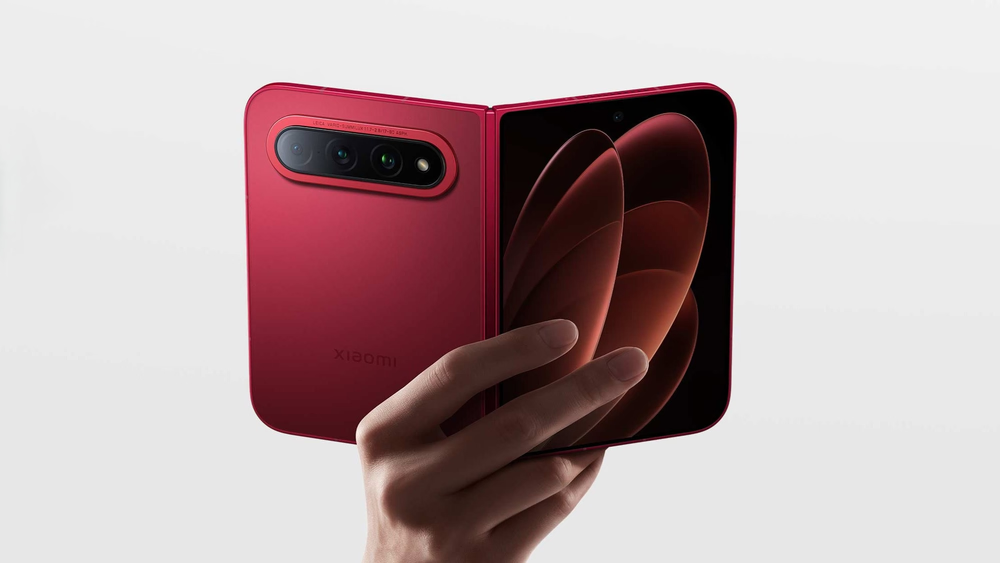
Xiaomi 18 Fold
Platform
OS: Android 17, HyperOS 4CPU: XRing O3 (3 nm)
Memory
12/256, 12/512, 16/512, 16/1024Size
7.58" inner, 5.38" cover219 g (7.72 oz)
163.8 x 117.8 x 5.0 mm unfolded
6.45 x 4.64 x 0.20 in unfolded
Battery
6000 mAh, 67W wired, 50W wirelessReleased: September 7, 2026 (China)
Price: about 1400 EUR
Main camera
200 MP, f/1.7, 23mm (wide), 1/1.56", OIS (Leica)50 MP, f/2.8, 80mm (periscope telephoto), 3.5x optical zoom, OIS
50 MP, f/2.4, 17mm (ultrawide)
Video modes
8K@24fps4K@30/60fps (Dolby Vision)
1080p@30/60/120/960fps
Selfie camera
16 MP, f/2.2, 21mm (wide), inner and coverVideo modes
1080p@30/60fps🤖 CPU
The Xiaomi 18 Fold is the first foldable to run Xiaomi's in-house XRing O3 (3 nm), a 10-core chip running up to 4.35 GHz with an Arm G2-Ultra NX GPU. Paired with Android 17 and HyperOS 4 plus UFS 4.1 storage, it handles 200 MP multi-frame capture, 8K encoding and heavy split-screen multitasking without the thermal complaints that used to follow thin foldables.
Against the Dimensity 9500 in the vivo X Fold6 and the Snapdragon 8 Elite Gen 5 in the Honor Magic V6 and OPPO Find N6, Xiaomi trades Qualcomm's proven drivers for vertical integration: the ISP, memory controller and imaging pipeline are tuned together rather than assembled from off-the-shelf parts. In sustained camera workloads the gap to its three rivals is small, but Xiaomi's chip is the newest silicon in this subsection and the only one with an LPDDR6 memory subsystem.
📸 Camera
The Leica triple camera pairs a 200 MP 23mm main sensor (1/1.56-inch, OIS) with a 50 MP 80mm periscope offering 3.5x optical zoom and a 50 MP 17mm ultrawide. Video reaches 8K@24fps with 4K@60fps in Dolby Vision, and the 960fps slow-motion mode is the fastest here. Colour science carries the familiar Leica Summilux tuning, which keeps contrast and skin tones consistent across all three lenses.
Compared with its subsection rivals, Xiaomi sits between vivo's larger 1/1.4-inch main sensor with its optional 200 mm teleconverter and Honor's smaller but superbly stabilised 64 MP periscope (CIPA 6.5), while OPPO answers with its own 200 MP main sensor in a more balanced Hasselblad triple. Xiaomi's honest compromises are video ceiling (4K60 where rivals offer 4K120) and selfies (16 MP cameras capped at 1080p), so it is the strongest pick for rear-camera stills rather than vlogging.
💿 Memory & Storage
Xiaomi offers 12 GB or 16 GB of RAM with 256 GB, 512 GB or 1 TB of UFS 4.1 storage and no card slot. That ceiling matches Honor, OPPO and vivo exactly, so large 200 MP bursts and 8K clips have the same headroom everywhere in this group.
The practical difference is availability, not capacity: the 18 Fold launched in China on September 7, 2026 at about 1400 EUR with no confirmed global release yet, while its three rivals all have established international or import channels. If you can buy one at all where you live, the configuration ladder itself gives no reason to prefer any of the four on memory alone.
📱 Display
The 7.58-inch inner LTPO AMOLED panel (2364 x 1672, ~382 ppi, 120 Hz, 4000 nits peak, Dolby Vision and HDR Vivid) follows Xiaomi's "mid-fold" passport ratio of roughly √2:1, with a 5.38-inch LTPO cover screen protected by Dragon Crystal Glass 3. The new dragon-bone hinge and thinner display stack keep the average crease depth at no more than 30μm, the flattest claim Xiaomi has ever made.
Against the subsection, Xiaomi's inner panel is smaller than Honor's 7.95-inch screen and OPPO's 8.12-inch Zero-Feel Crease panel but larger and squarer than vivo's tall cover-led layout. OPPO still holds the flattest-screen reputation among reviewers, while Xiaomi's advantage is ratio rather than size: the near-square canvas is unusually pleasant for reviewing portrait photos and reading, if less cinematic for video than its wider rivals.
🔋 Battery
A 6000 mAh silicon-carbon cell with 67W wired charging, 50W wireless and reverse wired support puts the 18 Fold level with OPPO on capacity and wireless speed. The IP58/IP59 rating is shared with only Huawei's foldable elsewhere in this guide and makes the Xiaomi one of the few folding phones you can take into genuinely bad weather.
vivo's 7000 mAh cell and Honor's 6660 mAh unit both outlast it, and all three rivals charge wired at 80W against Xiaomi's 67W, so heavy shooting days with short top-up windows favour the competition. Xiaomi's answer is efficiency from the XRing O3 and the smallest, lightest chassis in the group (219 g, 5.0 mm unfolded), which is the trade most travelling photographers will happily accept.
🎞️ YouTube reviews
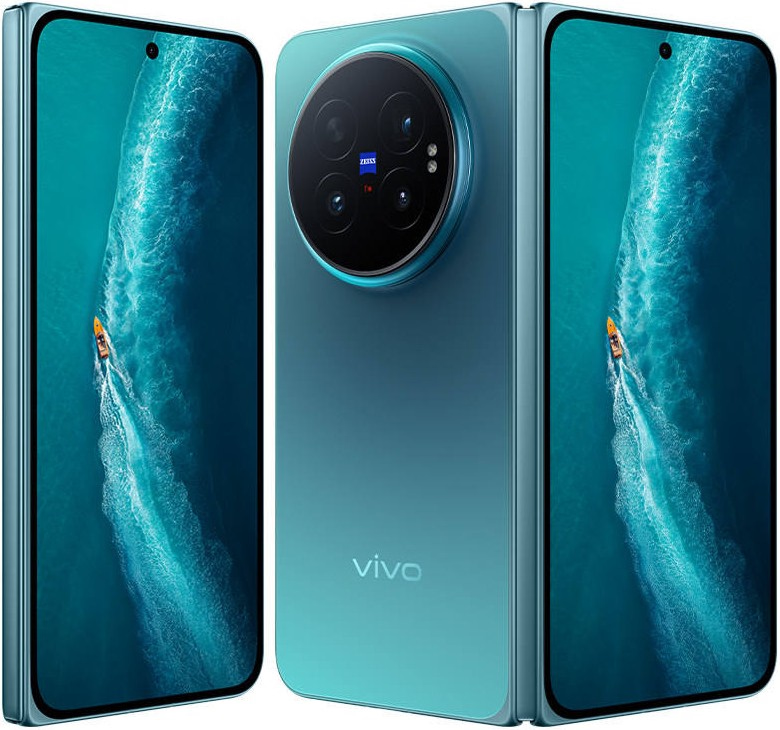
vivo X Fold6
Platform
OS: Android 16 (OriginOS)CPU: MediaTek Dimensity 9500
Memory
12/256, 16/512, 16/1024Size
8.0" inner, 6.5" cover4.4 mm unfolded
Battery
7000 mAh, 80W wired, 40W wirelessBuy now on AliExpress
Main camera
200 MP, f/1.68, 23mm (wide), 1/1.4", OIS50 MP, ZEISS APO periscope telephoto, 3x optical zoom, OIS
50 MP (ultrawide), autofocus
Video modes
8K@30fps4K@30/60/120fps
1080p@30/60/120/240fps
Selfie camera
32 MP (cover), 32 MP (inner)Video modes
4K@30/60fps1080p@30/60fps
🤖 CPU
vivo swapped Qualcomm for MediaTek this generation, and the Dimensity 9500 is a genuine flagship part rather than a compromise. It handles 200 MP capture, multi-frame processing and heavy multitasking without the thermal spikes that used to show up on thin foldables, which matters because the X Fold6 is only 4.4 mm thick when open.
Compared with the Snapdragon 8 Elite Gen 5 in the Honor Magic V6 and the OPPO Find N6, the Dimensity 9500 trades a little peak GPU performance for strong efficiency and excellent image-signal processing, which vivo leans on heavily with its V-series imaging pipeline. In sustained camera workloads — the ones that actually matter on this page — the gap between the three is far smaller than the benchmark charts suggest.
📸 Camera
On paper this is the most ambitious camera system of any foldable here: a 200 MP main sensor with a 1/1.4-inch footprint, a 50 MP ZEISS APO periscope telephoto and a 50 MP ultrawide, all three with autofocus and the main and telephoto stabilised. Detail at 1x is excellent, and the APO-certified telephoto is unusually well corrected for colour fringing at long range.
The conversation-starter is the optional ZEISS G2 teleconverter, which pushes the periscope to a 200 mm equivalent — a level of optical reach no other foldable offers. Honor counters with a 64 MP periscope and class-leading CIPA 6.5 stabilisation, and OPPO matches the 200 MP main resolution but uses a smaller sensor. If long-range photography is the reason you are buying a foldable, the X Fold6 is the most interesting device in this entire guide, though its European configuration and pricing have been confirmed later than its Chinese launch.
💿 Memory & Storage
vivo offers 12 GB or 16 GB of RAM with storage up to 1 TB, and the combination with a 200 MP sensor is not accidental: those files are large, and multi-frame processing on them is memory-hungry. Buyers who intend to shoot at full resolution should skip the 12 GB tier.
Honor and OPPO offer the same 16 GB/1 TB ceiling, so there is no clear winner on paper here. What separates them is software behaviour: vivo's OriginOS keeps camera processes resident more aggressively, which makes reopening the camera after a heavy burst feel instant, while Honor and OPPO lean on their own AI preloading. On capacity alone, all three are generous.
📱 Display
The 8-inch inner panel is a high-refresh LTPO OLED with strong peak brightness and a crease that has improved noticeably generation over generation, while the cover screen follows the taller, narrower shape vivo has used on previous X Fold models rather than the wide design Samsung and Google favour.
That makes the X Fold6 feel more like a conventional phone when closed, which some buyers will prefer, and it keeps the unfolded aspect ratio excellent for reviewing portrait-orientation photos. Honor's inner panel is marginally larger and flatter, and OPPO's is the crease-free standout of this subsection. If viewing comfort matters more than absolute flatness, vivo is the most familiar of the three.
🔋 Battery
A 7,000 mAh silicon-carbon cell is the headline specification here, and it is the largest battery in this roundup. Combined with 80 W wired and 40 W wireless charging, the X Fold6 can absorb a heavy day of photography and video without asking for a charger.
Honor's 6,660 mAh cell and OPPO's 6,000 mAh unit are both strong, but neither matches vivo on raw capacity, and the differences stretch further in real use because all three use similar silicon-carbon technology. For travel and event photography, where charging opportunities are irregular, this is the most reassuring device of the three.
🎞️ YouTube reviews
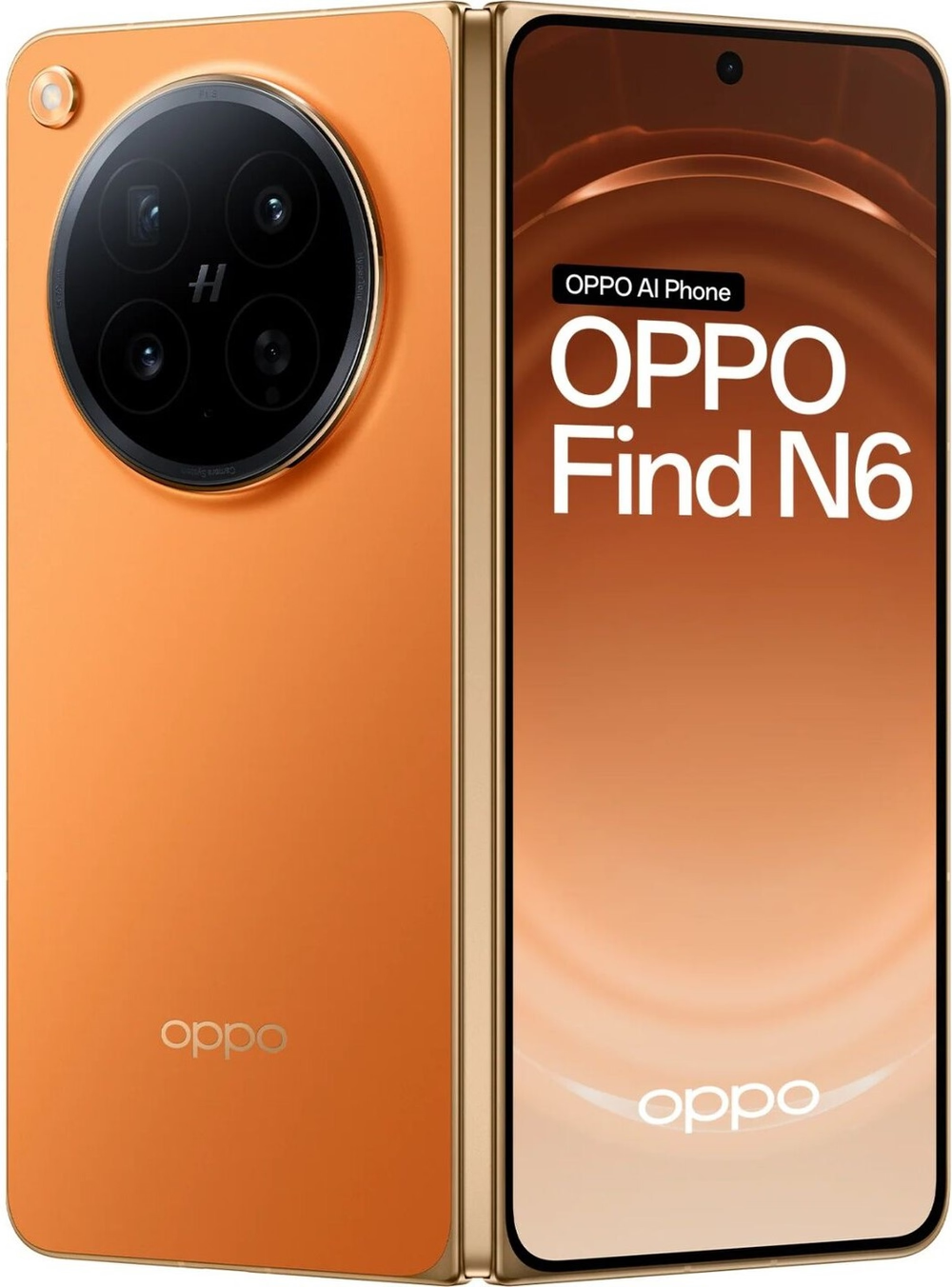
OPPO Find N6
Platform
OS: Android 16 (ColorOS 16)CPU: Snapdragon 8 Elite Gen 5 (3 nm)
Memory
12/256, 16/512, 16/1024Size
8.12" inner, 6.62" coverBattery
6000 mAh, 80W wired, 50W wirelessBuy now on Amazon
Main camera
200 MP, f/1.8, 23mm (wide), 1/1.56", OIS (Hasselblad)50 MP, f/2.6, 72mm (periscope telephoto), 3x optical zoom
50 MP (ultrawide)
Video modes
4K@30/60/120fps1080p@30/60fps
Selfie camera
20 MP (cover), 20 MP (inner)Video modes
4K@30fps1080p@30/60fps
🤖 CPU
OPPO pairs the Snapdragon 8 Elite Gen 5 with an extremely thin chassis, and the engineering work that went into keeping thermals in check is visible in daily use: the Find N6 stays cool during long camera sessions and never feels like it is throttling its way through a burst.
Honor takes the opposite approach and ships the chip unconstrained, while vivo builds on MediaTek's Dimensity 9500, which is more efficient per watt but slightly behind on peak graphics. For stills and video capture, all three are more than fast enough, and the practical differences show up mainly in sustained gaming rather than photography.
📸 Camera
OPPO equipped the Find N6 with a 200 MP main sensor, a 50 MP 3x periscope telephoto and a 50 MP ultrawide, all tuned with Hasselblad. Hasselblad Hi-Res mode lets all three cameras shoot at 50 MP and the main camera reach 200 MP, so you can crop aggressively from any focal length rather than only the widest one.
The main sensor is smaller than vivo's despite the identical megapixel count, which shows up in low-light pixel quality, and Honor's telephoto has the better stabilisation. What OPPO offers instead is the most balanced triple-camera system of the three, with a genuinely useful 3x periscope, telemacro capability and colour science that holds together across all lenses — the quality that matters most when you switch focal lengths mid-shoot.
💿 Memory & Storage
The Find N6 is offered with up to 16 GB of RAM and 1 TB of storage, exactly matching Honor and vivo, so there is no differentiation to be found on this page of the spec sheet.
ColorOS 16 handles large camera buffers well, and the extra memory is put to work keeping the camera and gallery resident when you switch back and forth between shooting and reviewing. In practice the three Chinese foldables in this subsection are indistinguishable on memory behaviour, so this category should not decide your purchase.
📱 Display
The 8.12-inch inner display is the largest in this subsection and carries OPPO's "Zero-Feel Crease" panel, which reviewers consistently describe as the flattest folding screen on the market. Combined with the thinnest closed profile in its class, the Find N6 is the foldable you notice least when folded.
Honor's panel is slightly smaller with a more visible crease but a lighter chassis, and vivo's cover screen is the more phone-like of the three. If your main use for the inner screen is reviewing and editing large image files, OPPO's flat panel is the most pleasant surface to work on, and it is one of the strongest reasons to choose this phone over its rivals.
🔋 Battery
With a 6,000 mAh cell, 80 W wired charging and 50 W wireless charging, the Find N6 comfortably lasts a heavy day and refills quickly. It is also rated IP59, which is unusual for a book-style foldable and adds real peace of mind outdoors.
Honor and vivo both offer larger batteries, and Honor charges wirelessly faster still. OPPO's advantage is that none of this comes at the cost of thickness: the Find N6 remains the slimmest device in this subsection, which is the trade-off most buyers will happily accept for a few hundred milliamp-hours.
🎞️ YouTube reviews
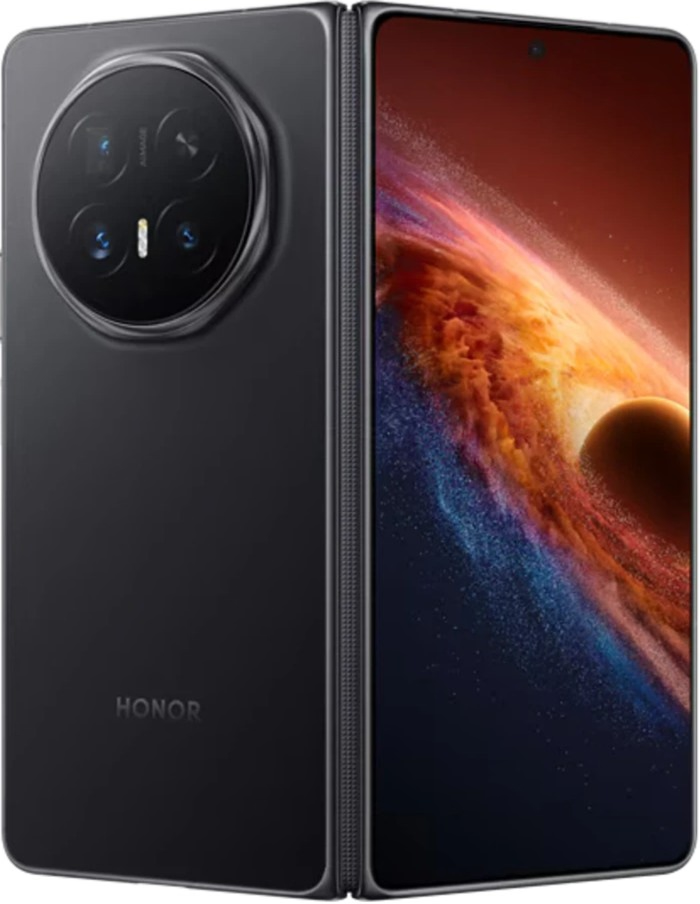
Honor Magic V6
Platform
OS: Android 16 (MagicOS 10)CPU: Snapdragon 8 Elite Gen 5 (3 nm)
Memory
12/256, 16/512, 16/1024Size
7.95" inner, 6.52" cover219 g, 8.75 mm folded
Battery
6660 mAh, 80W wired, 66W wirelessBuy now on Amazon
Main camera
50 MP, f/1.6, 24mm (wide), OIS64 MP, f/2.5, 70mm (periscope telephoto), 3x optical zoom, OIS (CIPA 6.5)
50 MP, f/2.0 (ultrawide)
Video modes
4K@30/60fps1080p@30/60fps
Selfie camera
20 MP (cover), 20 MP (inner)Video modes
4K@30fps1080p@30/60fps
🤖 CPU
Honor ships the full-fat Snapdragon 8 Elite Gen 5 rather than a detuned variant, so the Magic V6 performs on par with Samsung's Fold8 Ultra in sustained workloads despite being noticeably thinner and lighter. MagicOS 10 adds its own AI features, but the underlying platform is the most powerful available to an Android foldable this year.
Neither the vivo X Fold6 nor the OPPO Find N6 gives up much in daily use, but OPPO deliberately uses a slightly restrained configuration in exchange for thermals in its ultra-thin chassis. If you want maximum headroom without watching thermal warnings, Honor is the safest of the three — and the gap shows most clearly during long 4K recordings.
📸 Camera
The Magic V6 uses a 50 MP main sensor, a 50 MP ultrawide and a 64 MP periscope telephoto with 3x optical zoom, and it is the telephoto that does the heavy lifting. Independent testing has repeatedly found it the strongest of the three cameras, with detailed output and useful effective magnification around 6x.
Its real differentiator is stabilisation: a CIPA 6.5 rating on the periscope is a specification normally reserved for dedicated cameras, and it makes handheld long-zoom stills and video meaningfully sharper than the competition. vivo brings a larger 200 MP main sensor and a 200 mm teleconverter, and OPPO uses a higher-resolution main sensor as well, so Honor loses the spec sheet argument but wins on consistency and hand-holdability.
💿 Memory & Storage
Configuration runs from 12/256 to 16/1TB, with the European model sold as a single 16/512 variant. That ceiling matches OPPO and sits above what most Western buyers will realistically need for photo and video work.
The more interesting difference is software support: Honor promises up to seven major Android upgrades, which now matches Samsung and comfortably beats most Chinese rivals. For a device you plan to keep for years while its camera pipeline improves through firmware, that commitment matters as much as the storage tier itself.
📱 Display
The 7.95-inch inner panel opens to just 4 mm and pairs with a 6.52-inch cover screen in a device that weighs 219 g, which is remarkable given the battery inside. The crease is more noticeable than OPPO's newest panel but less obtrusive than Google's, putting it squarely in the middle of this group.
vivo's cover screen is narrower and more phone-like, while OPPO's "Zero-Feel Crease" inner panel is the flattest of the three. Honor's argument is balance rather than superiority in any one metric: a large, bright main display, a usable cover screen and a chassis light enough to forget it is a foldable at all.
🔋 Battery
The 6,660 mAh silicon-carbon battery with 80 W wired and 66 W wireless charging is the most complete power package in this subsection. Only vivo outlasts it on capacity, and no rival here charges wirelessly as quickly.
Add IP68/IP69 dust and water resistance and the Magic V6 becomes the foldable you can actually take into bad weather, which the Find N6 and the X Fold6 cannot match in quite the same way. For photographers working outdoors, that durability combination is arguably a more useful advantage than another few hundred milliamp-hours.
🎞️ YouTube reviews
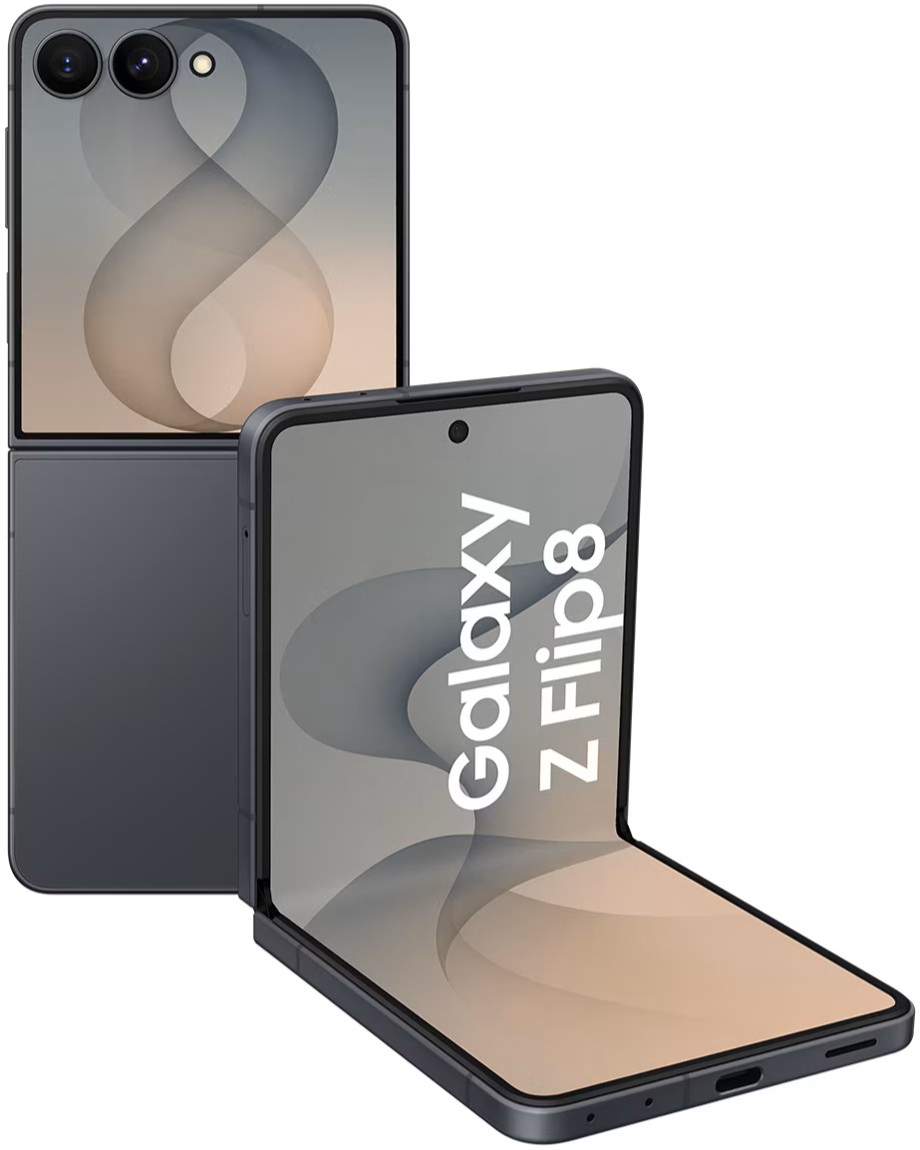
Samsung Galaxy Z Flip8
Platform
OS: Android 17 (One UI 9)CPU: Snapdragon 8 Elite Gen 5 for Galaxy / Exynos 2600
Memory
12/256, 12/512Size
6.9" inner, 4.1" cover180 g
Battery
4300 mAh, 25W wired, 15W wirelessBuy now on Amazon
Main camera
50 MP, f/1.8, 24mm (wide), 1/1.57", dual pixel PDAF, OIS12 MP, f/2.2, 123° (ultrawide)
Video modes
4K@30/60fps1080p@30/60/240fps
Selfie camera
10 MP, f/2.2, 24mm (wide)Video modes
4K@30/60fps1080p@30/60fps
🤖 CPU
Samsung splits the Z Flip8 between the Snapdragon 8 Elite Gen 5 for Galaxy in some regions and its own Exynos 2600 in others, the first time the Flip line has been offered with an in-house chip. Both are current-generation flagship parts, so performance is strong either way, but buyers in some markets get the more efficient Snapdragon variant.
That is more processing power than this camera system needs. The Mate X7 has the weaker chip but a far more ambitious camera, and the Razr Fold pairs a slightly older Snapdragon with three 50 MP sensors. The Flip8 wins on efficiency and software maturity, not on photographic headroom.
📸 Camera
The Z Flip8 keeps a dual-camera setup with a 50 MP main sensor and a 12 MP ultrawide, now paired with vlogging-focused features and the familiar FlexCam advantages of a folding phone: you can prop it on a surface, use the cover screen as a viewfinder, and shoot hands-free with the main camera.
Independently, this is the least capable camera in the guide. The Razr Fold offers twice the sensor count with a real 3x telephoto, and the Mate X7 outclasses both on hardware. The Flip8's value is entirely about form factor: it is 180 g, it fits in a pocket, and its cover screen makes framing self-recorded video easy in a way that no slab phone matches. If you want flagship stills, look elsewhere in this list; if you want the most usable creator tool that folds in half, this is it.
💿 Memory & Storage
Memory is limited to 12 GB with 256 GB or 512 GB of storage, the smallest ladder in this guide and a reminder that the Flip line is positioned below the Fold on the spec sheet.
Both the Razr Fold and the Mate X7 start at 16 GB and 512 GB, which matters if you shoot a lot of 4K video or keep a large photo library locally. For typical social-first use, 12 GB and 256 GB is comfortable; for anyone who treats this as a primary camera device, the lack of a 1 TB option is a genuine limitation.
📱 Display
The 6.9-inch inner display is a bright 120 Hz AMOLED panel, and the real story is the cover screen, which is usable enough to run full apps and to serve as a proper viewfinder for the main cameras when the phone is folded.
Neither the Mate X7 nor the Razr Fold gives you that combination: they offer far more screen area when open, but they cannot be operated one-handed while closed in the same comfortable way. For street and travel photography where quick framing matters more than editing canvas, the Flip8's cover screen is a practical advantage rather than a gimmick.
🔋 Battery
With 4,300 mAh, the Z Flip8 has the smallest battery in this roundup, and 25 W wired charging is the slowest here too. Efficient silicon and a smaller, lower-resolution panel stretch it through a normal day, but heavy 4K capture will have you reaching for a charger by evening.
The Razr Fold and the Mate X7 both offer batteries in the 5,600-6,000 mAh range, so the Flip8 concedes endurance in exchange for a folded size and 180 g weight that neither rival approaches. That is a straightforward trade rather than a flaw, but it should factor into your decision if you shoot for a living.
🎞️ YouTube reviews
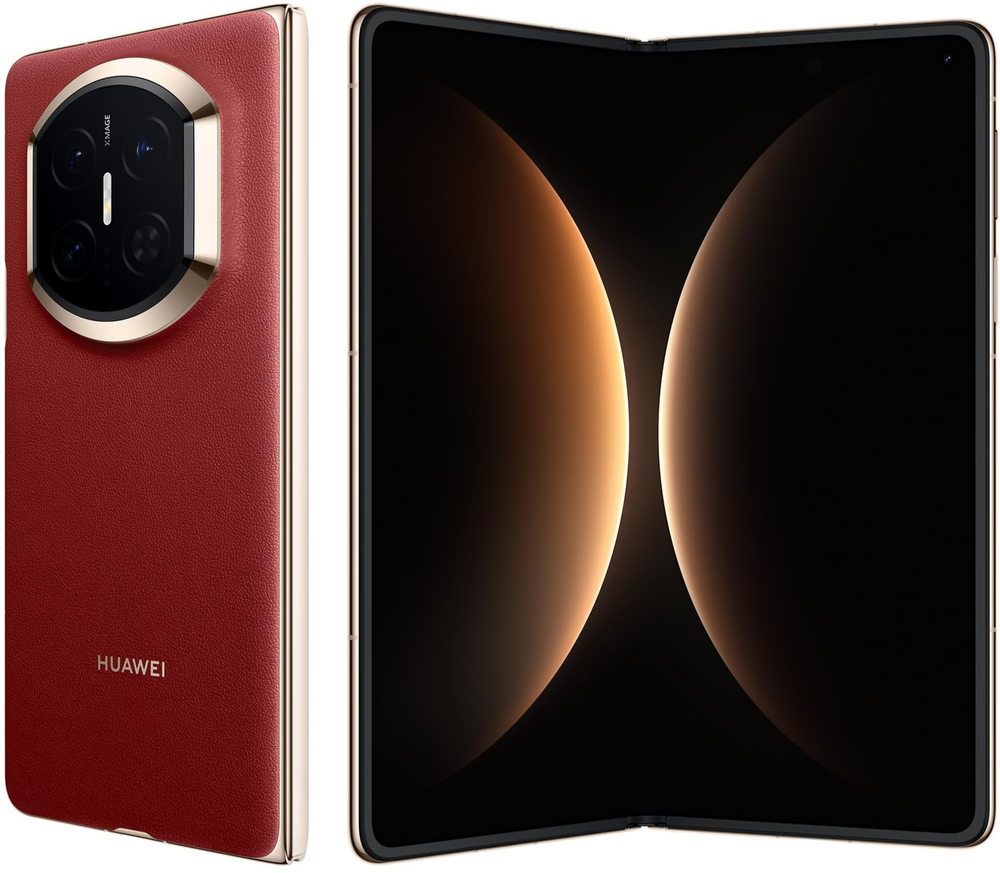
Huawei Mate X7
Platform
OS: EMUI 15 (global) / HarmonyOSCPU: Kirin 9030 Pro
Memory
16/512Size
8.0" inner, 6.49" coverBattery
5600 mAh, 66W wired, 50W wirelessBuy now on Amazon
Main camera
50 MP, f/1.49-f/4.0 variable aperture, 24mm (wide), 1/1.28" RYYB, OIS50 MP, 3.5x optical zoom (periscope telephoto), macro
40 MP, 13mm, 120° (ultrawide)
Video modes
4K@30/60fps (HDR Vivid)1080p@30/60/240/960fps
Selfie camera
8 MP (cover), 8 MP (inner)Video modes
4K@30fps1080p@30/60fps
🤖 CPU
The Kirin 9030 Pro is the Mate X7's weak point relative to its camera hardware. It is a capable chip for everyday tasks and image processing, but it trails the Snapdragon 8 Gen 5 inside the Motorola Razr Fold and the Snapdragon 8 Elite Gen 5 in the Galaxy Z Flip8 by a wide margin in sustained performance and GPU work.
The bigger caveat is the ecosystem. The global Mate X7 ships with EMUI 15 and no Google services, so many apps that photographers rely on for cloud syncing and sharing need workarounds. That is a real cost, and it is the reason this phone is easier to recommend as a specialist tool than as a daily driver.
📸 Camera
On pure hardware, the Mate X7 has the best camera system of any foldable in this guide. Its 50 MP main sensor uses a 1/1.28-inch RYYB sensor — physically larger than anything Samsung, Google or Apple fit into their folds — with a mechanical variable aperture that physically stops down from f/1.49 to f/4.0, something no rival offers.
Around it sit a 50 MP 3.5x periscope telephoto that doubles as a macro lens and a 40 MP ultrawide, and reviewers have singled out its colour and tonal rendering as the strongest of any foldable. The Razr Fold answers with three 50 MP sensors and the best DXOMARK foldable score, and the Z Flip8 trades reach for portability, but neither matches Huawei on lens-by-lens hardware. If you want manual control and depth-of-field options on a folding phone, nothing else comes close.
💿 Memory & Storage
Huawei offers a single 16 GB/512 GB configuration in most global markets, with higher-capacity versions in China. That is generous on RAM and adequate on storage, though it leaves buyers without an upgrade path.
The Razr Fold ships 16 GB/512 GB as standard and the Z Flip8 keeps to 12 GB with 256 GB or 512 GB, so the Mate X7 matches the best of this subsection on memory. The difference is that neither Motorola nor Samsung asks you to give up Google's app ecosystem to get there, which is the trade this phone makes.
📱 Display
The 8-inch LTPO inner panel is paired with a 6.49-inch cover display, and Huawei has reduced the crease further using a carbon-fibre support layer and ultra-thin glass. Brightness is excellent on both screens, and the near-square inner aspect ratio works well for photo review.
The Razr Fold offers a larger 8.1-inch inner panel in the US, and the Z Flip8 goes the other way with a 6.9-inch folding screen built for pocketability. Huawei's display is the most refined of the three in terms of crease suppression, but the software compromises attached to the global model mean you pay for that hardware advantage every day.
🔋 Battery
A 5,600 mAh battery with 66 W wired and 50 W wireless charging puts the Mate X7 close to the best in this group, and reviewers consistently report endurance approaching 20 hours of mixed use. The IP58/IP59 rating is an industry first for a book-style foldable and makes it genuinely weather-resistant.
The Razr Fold carries a 6,000 mAh cell with 80 W charging and the Z Flip8 a 4,300 mAh unit with a much smaller footprint. Only the Flip needs to be charged with real discipline, but the Flip also weighs far less. Across this subsection, the Mate X7 is the most capable all-round endurance and durability story, provided you can live with the software caveats.
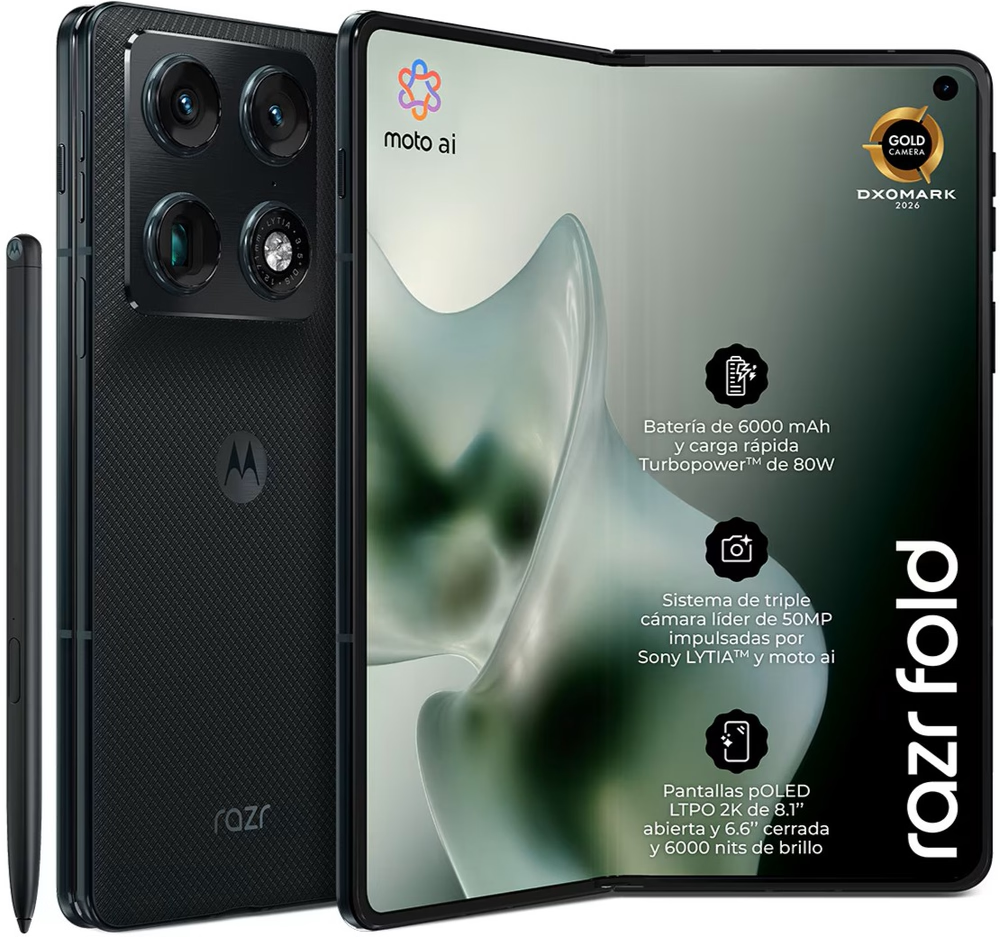
Motorola Razr Fold
Platform
OS: Android 16 (Hello UI)CPU: Snapdragon 8 Gen 5
Memory
16/512, 16/1024Size
8.1" inner, 6.6" coverBattery
6000 mAh, 80W wired, 50W wirelessBuy now on Amazon
Main camera
50 MP, f/1.8, 24mm (wide), Sony LYTIA, OIS50 MP, f/2.0, 72mm (telephoto), 3x optical zoom, OIS
50 MP, f/2.2 (ultrawide), macro
Video modes
8K@30fps4K@30/60fps (Dolby Vision)
1080p@30/60fps
Selfie camera
32 MP (cover), 20 MP (inner)Video modes
4K@30fps1080p@30/60fps
🤖 CPU
Motorola uses the Snapdragon 8 Gen 5, a half-step behind the Elite-branded chips in the Honor Magic V6 and OPPO Find N6. In everyday use the difference is hard to notice; in long gaming sessions it is, and the Razr Fold also runs warmer than either rival when pushed.
What it lacks in peak throughput it makes up for with a clean, uncluttered Android build and Moto Pen support across both screens, which neither the Mate X7 nor the Z Flip8 offers. For a phone that wants to be a note-taking and photo-reviewing tablet as well as a camera, that combination is more useful than a few extra benchmark points.
📸 Camera
Motorola went all in on three 50 MP sensors — a stabilised main camera, a telephoto with 3x optical zoom and an ultrawide with macro — using two current-generation Sony LYTIA sensors. The result is the highest DXOMARK camera score recorded for a foldable, with exposure accuracy and skin tones singled out as the strongest aspects.
That portrait-friendly tuning is what separates it from the Mate X7's larger variable-aperture sensor and the Z Flip8's smaller two-camera setup. Against Huawei it loses on absolute detail and manual control; against Samsung's flip it wins on zoom reach, 8K capture and consistency. For photographing people rather than landscapes, it is the best-sorted camera of this subsection.
💿 Memory & Storage
Motorola ships a single flagship configuration of 16 GB with 512 GB or 1 TB of storage, which is generous by default and avoids the annoying entry-tier compromises some rivals still sell.
The Mate X7 matches it on RAM and the Z Flip8 offers only 12 GB with up to 512 GB. Software support is where Motorola trails: its update commitment is shorter than Samsung's seven-year promise and shorter than Honor's, so a phone you keep for years will fall behind on features even if the hardware holds up.
📱 Display
The 8.1-inch inner panel is the largest in this roundup for the US market, paired with a 6.6-inch cover screen and offered in distinctive Pantone colourways with a vegan-leather finish. The crease is more visible than on Huawei's or OPPO's newest panels, which is the price of the larger surface.
Huawei's inner screen is slightly smaller but flatter, and the Z Flip8 opts for a much smaller 6.9-inch folding panel to stay pocketable. If the inner display is where you review and edit images, Motorola's extra area is a tangible benefit, and Moto Pen support makes it the most tablet-like of the three.
🔋 Battery
A 6,000 mAh silicon-carbon battery with 80 W wired and 50 W wireless charging gives the Razr Fold effectively the same endurance story as the OPPO Find N6 and puts it ahead of the Mate X7 on charging speed.
The Z Flip8's 4,300 mAh cell is in a different class entirely, and it is only justified by the flip's far smaller folded footprint. For a large foldable, Motorola gets the balance right: a full-day battery without the bulk that used to come with it.
🎞️ YouTube reviews
Taken together, 2026 is the year foldable cameras stopped being an apology. The Apple iPhone Duo, Google Pixel 11 Pro Fold and Samsung Galaxy Z Fold8 Ultra now define the mainstream options: Samsung for maximum sensor resolution and a mature foldable workflow, Apple for video and ecosystem consistency, and Google for the easiest route to a good photograph at any focal length.
The Chinese quartet attacks the problem from the opposite direction. The Xiaomi 18 Fold brings the newest silicon with a Leica 200 MP triple camera in the lightest chassis here, the vivo X Fold6 brings a 200 MP main sensor and an optional 200 mm teleconverter, the Honor Magic V6 pairs the full Snapdragon 8 Elite Gen 5 with a 64 MP periscope and class-leading stabilisation, and the OPPO Find N6 combines the flattest folding panel on the market with a genuinely balanced Hasselblad triple camera. Three of the four still reach most Western buyers through import channels rather than carrier shelves.
Samsung's flip, Huawei and Motorola close out the field with three very different philosophies: the most pocketable creator tool of the lot, the largest main sensor and only true variable aperture on any foldable, and the highest DXOMARK foldable score with portrait-focused tuning.
One honest caveat runs through all ten: if the camera matters more to you than the folding screen, a conventional flagship still wins. The iPhone 18 Pro Max adds a variable aperture and a periscope the Duo does not have, the Pixel 11 Pro XL still edges its foldable sibling on pure image quality, and the Galaxy S26 Ultra keeps two telephoto cameras where the Fold8 Ultra has one. Buy a foldable because you want the larger screen, the cover-screen shooting and the hinge-as-tripod flexibility — not because it will beat a slab flagship on optics alone.